
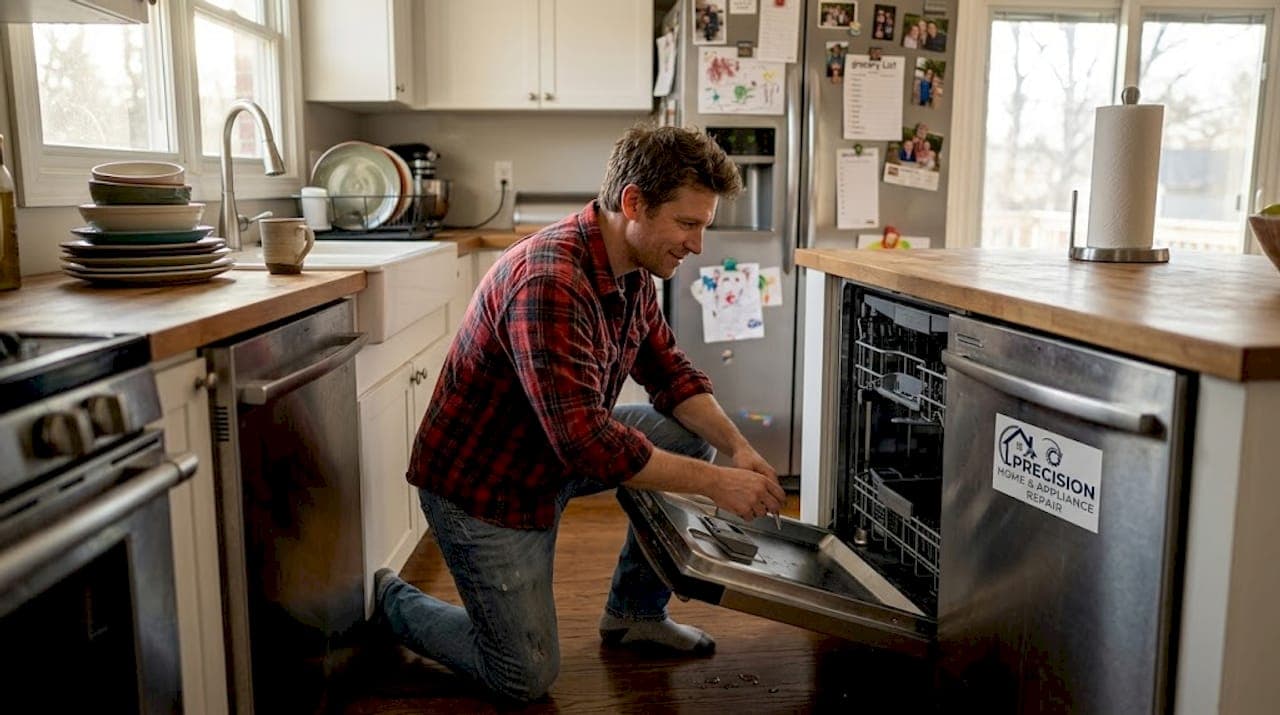
A single appliance breaking down can derail your entire day. The washing machine stops mid-cycle the morning of a big event, the refrigerator goes warm overnight, or the oven quits right before a holiday dinner. These are not rare disasters. They are the everyday reality for homeowners across Fox Valley, from Kaukauna to Appleton to Neenah. Knowing what to look for, how to respond, and when to stop tinkering and call a professional is the difference between a quick fix and a costly repair bill. This guide walks you through the most common appliance failures, real troubleshooting steps, and a clear breakdown of when DIY makes sense.
Table of Contents
- Understanding the most common appliance issues
- 10 real-world examples of appliance problems
- Troubleshooting steps for common appliance failures
- Comparison: DIY fix or call a repair expert?
- Preventive tips: Minimize future appliance headaches
- Why Fox Valley homeowners underestimate small appliance problems
- Get expert help for lasting appliance solutions
- Frequently asked questions
Key Takeaways
| Point | Details |
|---|---|
| Spot common symptoms | Recognizing typical warning signs lets you act early and avoid bigger repairs. |
| Use safe troubleshooting | Follow safe diagnostic steps before attempting any repair to reduce risk. |
| Know when to call a pro | Contacting an expert for complex or hazardous problems prevents further damage. |
| Maintain for prevention | Regular maintenance and cleaning are the best ways to avoid most appliance failures. |
Understanding the most common appliance issues
Appliance problems fall into four broad categories: electrical failures, mechanical breakdowns, water or gas issues, and operational errors. Understanding which category your problem belongs to shapes how you respond and how urgently you act.
Electrical failures include things like a control board that stops responding or a motor that will not start. Mechanical breakdowns involve moving parts like belts, drums, and pumps that wear out over time. Water and gas issues are the most safety-sensitive and include leaks, pressure problems, and faulty valves. Operational errors are often user-related or software-driven, like a dishwasher stuck in a cycle or a refrigerator displaying an error code.
Recognizing symptoms early is key. Here are the warning signs that something is wrong:
- Unusual noises: grinding, banging, or squealing during operation
- Visible leaks or moisture around the unit
- Burning smells or discoloration near electrical components
- Appliance cycling on and off more frequently than normal
- Failure to start, heat, cool, or drain as expected
- Error codes on digital displays
Pro Tip: Write your appliance model numbers and warranty expiration dates on a sticky note inside the cabinet nearest each unit. When you call for service, having that information ready cuts the diagnostic call time significantly.
Categorizing the problem before you pick up the phone or open a panel makes every next step faster and safer.
10 real-world examples of appliance problems
These are the failures that show up most often in Fox Valley homes. Each one has a pattern, and recognizing it early saves you money.
- Washer not draining. Water sits at the bottom after a cycle. Check the drain hose for kinks and clean the pump filter. A clogged filter is the most common cause.
- Dryer not heating. Clothes come out damp. A blown thermal fuse is the usual culprit. Clean the lint trap and check the exhaust vent for blockages first.
- Refrigerator not cooling. Warm food and a running compressor signal dirty condenser coils or a failed evaporator fan. Vacuum the coils at the back or bottom of the unit.
- Dishwasher leaking water. Puddles on the floor after a cycle usually point to a worn door gasket or a cracked spray arm.
- Oven not reaching temperature. Baked goods coming out underdone? A faulty bake element or a miscalibrated temperature sensor is likely the cause.
- Microwave not turning on. Check the door latch switches first. A blown fuse inside the unit is common after a power surge.
- Garbage disposal jammed. A humming sound with no spinning means something is lodged in the grinding chamber. Use the hex wrench on the bottom of the unit to manually free it.
- Stove burner not lighting. Food debris clogging the igniter port is the most frequent cause. Clean around the burner cap with a dry toothbrush.
- Freezer frosting up. Excessive ice buildup usually means a failed defrost heater or a faulty door seal letting warm air in.
- Water heater making noise. Popping or rumbling sounds indicate sediment buildup at the bottom of the tank. Flushing the tank annually prevents this.
Appliance repair services that use fault-specific diagnostics can pinpoint the exact failure component rather than replacing parts by guessing.
Pro Tip: Always unplug an appliance before opening any panels or inspecting internal parts. Even a unit that appears off can hold a charge in its capacitors.
According to the U.S. Department of Energy, appliances account for roughly 20% of a household's energy bill, which means a malfunctioning unit is not just inconvenient. It is actively costing you more every day it runs inefficiently.
Troubleshooting steps for common appliance failures
Before calling anyone, run through this sequence. It resolves a surprising number of problems and gives a technician useful information when it does not.
- Check the power supply. Confirm the appliance is plugged in firmly. Check the circuit breaker panel for a tripped breaker. Reset it once and test the appliance again.
- Inspect the outlet. Plug a lamp or phone charger into the same outlet. If it does not work, the problem is the outlet, not the appliance.
- Look for visible damage. Scan for burnt wires, cracked hoses, pooling water, or unusual discoloration. Do not touch damaged components.
- Perform a manufacturer reset. Most modern appliances have a reset procedure listed in the user manual. Unplug the unit for 60 seconds, then plug it back in. This clears software errors.
- Consult the user manual. Error codes are listed in the manual with specific causes. If you no longer have the manual, the manufacturer's website usually has a downloadable version.
- Document what you find. Note the error code, the sounds, and the sequence of events before the failure. This information is valuable when you contact a professional for a diagnostic.
Never ignore a burning smell, a loud bang, or sparking from any appliance. These are not quirks to monitor. They are immediate safety hazards. Shut the unit off, unplug it if safe to do so, and call a technician before using it again.
A systematic approach prevents you from chasing the wrong problem and keeps you safe while doing it.
Comparison: DIY fix or call a repair expert?
Not every appliance problem requires a service call, but not every problem should be handled alone either. Here is a side-by-side breakdown to help you decide.
| Factor | DIY repair | Professional repair |
|---|---|---|
| Cost | Low upfront, parts only | $99+ diagnostic, labor included |
| Safety | Moderate risk without training | High, trained and insured |
| Warranty impact | May void manufacturer warranty | Uses OEM parts, preserves warranty |
| Success rate | High for simple tasks | High for complex and recurring issues |
| Time | Variable, depends on skill level | Scheduled, efficient |
When DIY is a reasonable choice:
- Cleaning condenser coils or lint traps
- Replacing a refrigerator water filter
- Unclogging a garbage disposal with the hex wrench
- Resetting a tripped breaker or a control panel
- Replacing a simple door gasket on a refrigerator
When to stop and call home appliance repair experts:
- Any issue involving gas lines or gas valves
- Persistent water leaks that do not resolve after a basic fix
- Electronic control board failures
- Repeated tripping of the same circuit breaker
- Any repair where you are not confident about the next step
DIY attempts on complex systems carry real risks. Voided warranties, worsened damage, and safety hazards are all possible outcomes when the repair goes beyond your skill level. Knowing where your limit is protects both your appliance and your home.
Preventive tips: Minimize future appliance headaches
The best repair is the one you never need. A consistent maintenance routine keeps your appliances running longer and gives you early warning when something is starting to fail.
- Clean refrigerator condenser coils every six months. Dust buildup forces the compressor to work harder and shortens its life.
- Inspect washing machine hoses annually for cracks or bulging. Replace rubber hoses with braided stainless steel hoses for durability.
- Clean dryer vents at least once a year. A clogged vent is a leading cause of house fires and also makes your dryer work harder.
- Run your dishwasher on a hot water cycle with a dishwasher cleaner monthly to prevent mineral buildup and odor.
- Flush your water heater annually to remove sediment that reduces efficiency and causes noise.
- Avoid overloading washers and dryers. Consistent overloading strains motors and bearings, shortening the lifespan of both units significantly.
- Check door seals on refrigerators and freezers every few months. A simple dollar bill test works: close the door on a bill and try to pull it out. If it slides easily, the seal needs replacing.
Pro Tip: Bookmark the manufacturer's support page for each major appliance in your home. Manufacturers post recall notices, firmware updates, and maintenance guides there. A five-minute check twice a year can catch a safety issue before it becomes a crisis.
Scheduled professional inspections, especially for gas appliances and water heaters, add another layer of protection that routine cleaning alone cannot provide.
Why Fox Valley homeowners underestimate small appliance problems
Here is something we see repeatedly in this region: a homeowner notices a faint noise from the refrigerator or a slight delay before the oven heats up, and they decide to wait and see. It seems minor. Life is busy. The appliance is still technically working.
That logic is expensive. In our experience, small symptoms are almost always early-stage failures. A refrigerator that hums slightly louder than usual is often a condenser fan motor starting to fail. Left alone, it leads to a compressor failure that costs three to four times more to repair. The "wait and see" approach is a habit that the appliance repair industry quietly depends on.
Fox Valley's climate adds to this. Cold Wisconsin winters and humid summers put real stress on appliances, especially refrigerators and HVAC-adjacent systems that cycle more aggressively than they would in milder climates. Usage patterns here are also demanding. Large households, frequent cooking, and high laundry loads are common.
A quick diagnostic call when you first notice something off is almost always cheaper than a reactive emergency repair. We built our $99 diagnostic model specifically because we believe homeowners deserve a clear answer fast, without committing to a large repair bill before they know what they are dealing with.
Get expert help for lasting appliance solutions
When the troubleshooting steps run out and the problem is still there, the next move matters. Guessing at parts or ignoring a persistent issue rarely ends well.

Precision Home Appliance serves homeowners and property managers across the Fox Valley region, including Kaukauna, Appleton, and Neenah, with expert diagnostics and repair services built on a fault-specific, data-driven approach. Starting with a transparent $99 diagnostic, we identify the root cause before recommending any repair. No guesswork, no unnecessary parts, no mess. If you are dealing with a refrigerator that will not cool, a washer that will not drain, or any appliance acting up, Fox Valley appliance repair from a team that treats your home like a precision system is one call away.
Frequently asked questions
What are the most common signs that an appliance needs repair?
Unusual noises, water leaks, failure to start or heat, frequent cycling, and visible error codes are the clearest indicators that an appliance needs attention from a technician.
Is it safe to attempt appliance repairs myself?
Basic checks like cleaning filters, resetting breakers, or clearing a jammed disposal are generally safe, but anything involving gas lines, water connections, or internal electrical components should be handled by a licensed professional.
How can I extend the life of my appliances?
Cleaning coils and filters on a regular schedule, avoiding overloads, inspecting hoses and seals annually, and following the manufacturer's maintenance guidelines all add years to appliance life.
When should I call a repair professional instead of fixing it myself?
Call a professional when the issue involves gas, when a water leak persists after a basic fix, when you see an electronic control board error, or any time you are uncertain about the safety of the next step.