
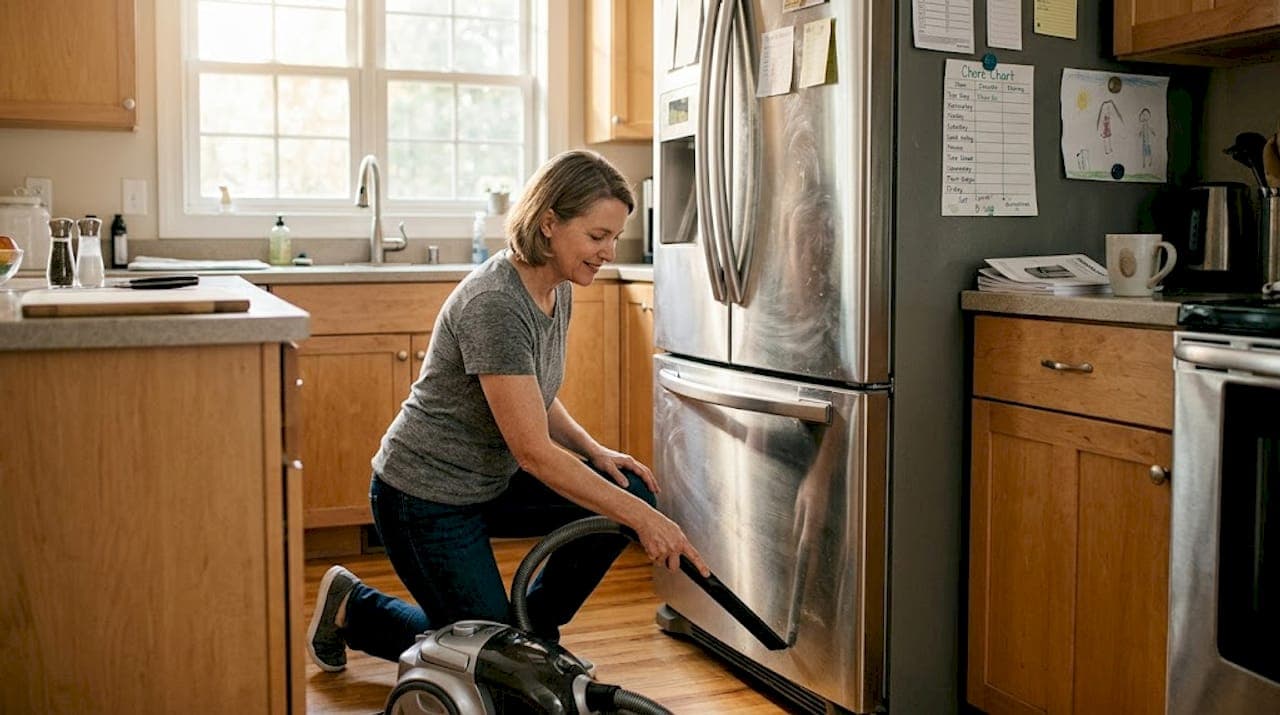
A broken refrigerator on a summer afternoon or a washing machine that quits mid-cycle is more than an inconvenience. It disrupts your entire household and can cost you hundreds of dollars without warning. Preventive maintenance reduces breakdowns by 60-70% and extends appliance life by 20-40%, yet most homeowners only call for help after something fails. This guide walks you through a practical, structured maintenance workflow built for Fox Valley homeowners and property managers who want fewer surprises, lower repair bills, and appliances that actually last.
Table of Contents
- Why a maintenance workflow matters
- What you need before you start
- Step-by-step workflow for appliance maintenance
- Troubleshooting and common mistakes
- A smarter approach: Lessons from the field
- Need reliable appliance repair or advice?
- Frequently asked questions
Key Takeaways
| Point | Details |
|---|---|
| Structured workflow saves money | A clear routine lowers repair costs and extends appliance life considerably. |
| Documentation is essential | Keeping records supports warranties and ensures maintenance is never missed. |
| Prevention beats reaction | Staying ahead with scheduled tasks prevents costly emergencies and stress. |
| Use expert resources | Professional advice and local services can resolve complex issues quickly. |
Why a maintenance workflow matters
Most people treat appliance care the same way they treat a car oil change: they wait until something feels wrong. That reactive mindset is expensive. Understanding the four types of maintenance is the first step toward changing that pattern.
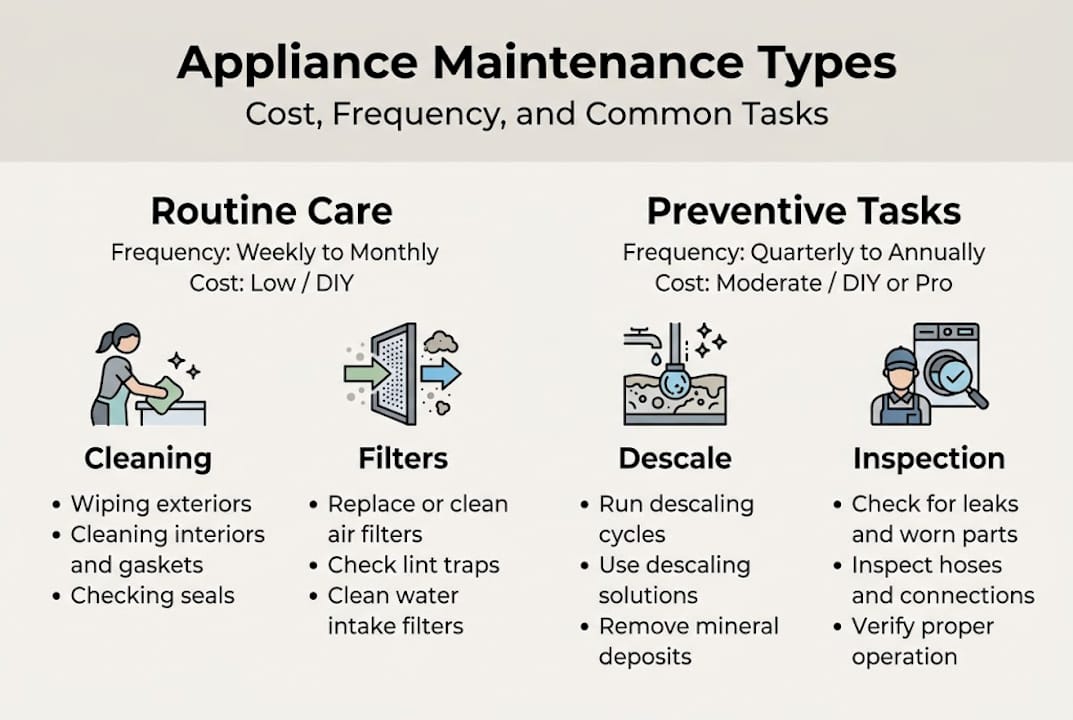
Routine maintenance covers regular cleaning and minor adjustments you do on a schedule. Preventive maintenance goes deeper, addressing wear before failure occurs. Corrective maintenance is what you do after a problem shows up but before it becomes critical. Emergency maintenance is the costly, stressful fix-it-now scenario everyone wants to avoid.
The goal of a structured workflow is to spend most of your time in the first two categories and almost none in the last one. Property managers use structured workflows that follow a clear sequence: receive a request, review and troubleshoot, schedule the repair, perform the work, follow up, and document everything. Homeowners can apply the exact same logic to their own appliances.
Here is why the numbers make this worth your attention:
| Maintenance type | Average cost | Frequency of need |
|---|---|---|
| Routine (cleaning, filters) | $0-$30 DIY | Monthly to quarterly |
| Preventive (tune-ups, parts) | $50-$150 | Every 6-12 months |
| Corrective (minor repairs) | $150-$400 | As needed |
| Emergency (major failure) | $200-$500+ | Unpredictable |
The math is straightforward. Spending $30 on a condenser coil cleaning twice a year is far better than a $400 compressor repair because you skipped it.
Key benefits of running a structured workflow:
- Fewer unexpected breakdowns and emergency service calls
- Longer appliance lifespan, often 20-40% beyond average
- Maintained warranty validity through documented care
- Easier insurance claims when you have a paper trail
- Lower overall cost of ownership over time
Documentation is not just paperwork. It is your proof of care. If a warranty dispute arises or you need to file an insurance claim, a maintenance log with dates and service notes is the difference between a covered repair and an out-of-pocket expense. Structured maintenance workflows are not just for large property management companies. They work just as well for a single-family home in Appleton or a rental duplex in Kaukauna.
What you need before you start
Before you run your first maintenance cycle, you need the right tools, the right information, and a system to track what you do. Skipping this setup phase is one of the most common reasons good intentions fall apart.
Essential tools and materials:
- Screwdrivers (flathead and Phillips, multiple sizes)
- Adjustable wrench and needle-nose pliers
- Vacuum with a brush attachment for coil and vent cleaning
- Appliance brush kit for tight spaces
- Multimeter for basic electrical checks
- Replacement filters, gaskets, and dryer lint traps
- Mild descaling solution for dishwashers and coffee makers
Critical information to have on hand:
- Model and serial numbers for every major appliance
- Current warranty status and expiration dates
- User manuals (digital or physical copies)
- Purchase receipts and past service records
Manufacturer guidelines specify exact maintenance intervals: refrigerator condenser coils every 6 months, washer clean cycle monthly, dishwasher filter monthly, and descaling every 6 months. These intervals are not suggestions. They are the baseline for keeping your warranty intact and your appliances running at peak efficiency.
| Appliance | Key maintenance task | Interval |
|---|---|---|
| Refrigerator | Clean condenser coils | Every 6 months |
| Washing machine | Run clean cycle | Monthly |
| Dishwasher | Clean filter and descale | Monthly / Every 6 months |
| Dryer | Clean lint trap and vent | After every load / Annually |
| HVAC system | Replace filter | Every 1-3 months |
For organization, a simple spreadsheet works. But digital apps like Centriq or HomeZada let you store manuals, set reminders, and log service history in one place. Either approach beats trying to remember when you last cleaned the dishwasher filter.
Pro Tip: Keep a dedicated folder, physical or digital, with every appliance manual, warranty card, and purchase receipt. When something breaks, you will have everything you need in 30 seconds instead of 30 minutes.
A good maintenance checklist tailored to your specific appliances is the foundation of the whole workflow. Build it once, then follow it consistently.
Step-by-step workflow for appliance maintenance
With your tools gathered and your records organized, here is how to run your maintenance workflow from start to finish.
Step 1: Schedule based on appliance type. Use the manufacturer intervals as your baseline. Set recurring calendar reminders so maintenance happens automatically, not only when you remember.
Step 2: Perform a routine inspection. Walk through each appliance on your checklist. Look for visible wear, unusual sounds, leaks, or error codes. Note anything that seems off, even if it is minor.
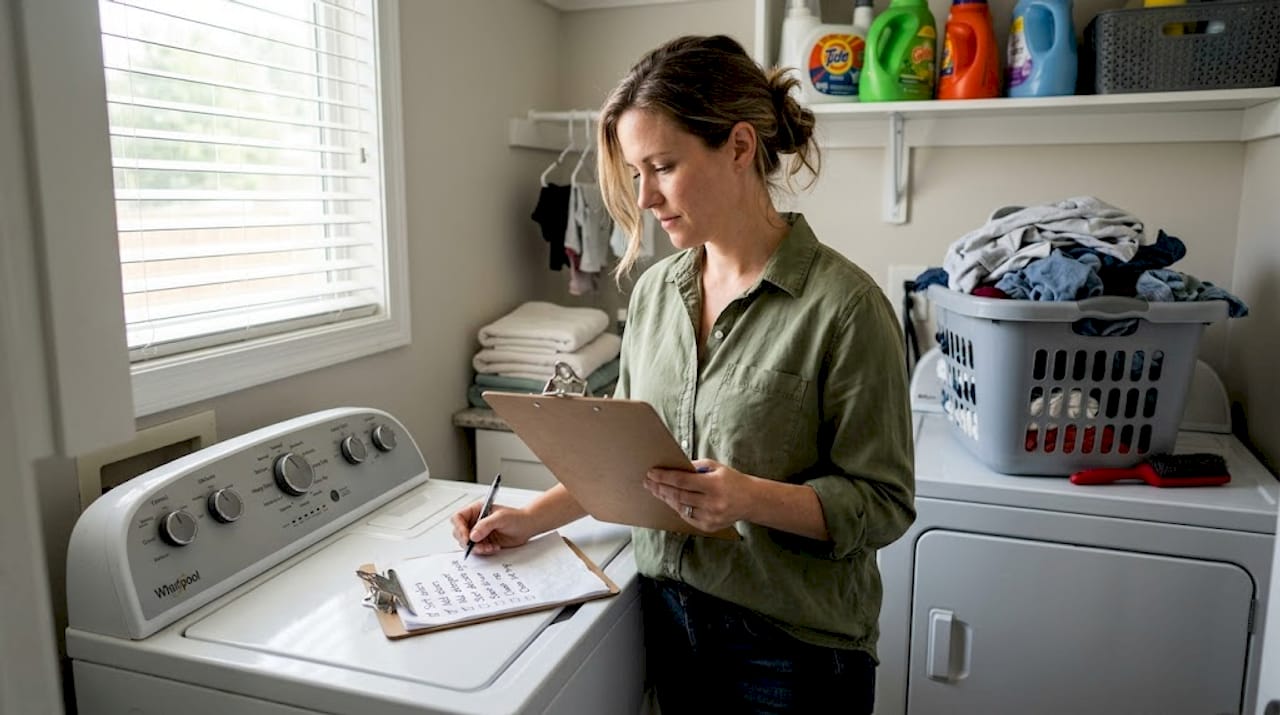
Step 3: Execute preventive maintenance tasks. Clean coils, replace filters, run clean cycles, and descale as scheduled. This is the hands-on work that prevents the big failures.
Step 4: Troubleshoot and document findings. If you find something during inspection, write it down. Note the symptom, the date, and what you did about it. Work orders should be resolved within 24-72 hours for routine issues, and documentation supports both warranty claims and future diagnostics.
Step 5: Decide whether to DIY or call a professional. Not every issue is a DIY fix. Use the 50% rule: if the estimated repair cost exceeds 50% of the cost of a new appliance, replacement is worth considering. For anything involving electrical components, refrigerant, or gas lines, call a professional.
| Task type | DIY appropriate | Call a pro |
|---|---|---|
| Filter replacement | Yes | No |
| Coil cleaning | Yes | No |
| Control board failure | No | Yes |
| Refrigerant recharge | No | Yes |
| Gas line issues | No | Yes |
The ideal maintenance ratio is 80% preventive to 20% corrective. Most households operate at the opposite ratio, which is why repair bills feel so unpredictable.
Pro Tip: Set a calendar reminder for the first Saturday of each month as your appliance check-in day. It takes less than 20 minutes and catches small issues before they become expensive ones.
For Fox Valley homeowners, Fox Valley appliance repair professionals can handle the tasks that fall outside the DIY column, especially when OEM parts and precise diagnostics are needed.
Troubleshooting and common mistakes
Even with a solid workflow in place, problems happen. Knowing how to read the warning signs and avoid the most common errors saves you time, money, and frustration.
Most frequent mistakes homeowners make:
- Skipping scheduled maintenance because the appliance seems fine
- Ignoring small warning signs like unusual sounds, slow draining, or longer cycle times
- Failing to document repairs, which voids some warranties
- Using non-OEM parts that fail faster and can cause secondary damage
- Attempting DIY repairs on gas or water-connected appliances without proper training
Appliance symptoms are usually telling you something specific. A refrigerator that runs constantly but struggles to stay cold often points to dirty condenser coils or a failing door gasket. A washer that vibrates excessively during spin usually signals an unbalanced load or worn drum bearings. Catching these patterns early is what separates proactive maintenance from expensive emergency calls.
Use extra caution with water- or gas-connected appliances. A small water leak ignored for weeks can cause significant structural damage. A gas appliance showing unusual behavior should be inspected by a licensed professional immediately, not troubleshot with a DIY approach.
Appliance repairs average $150-$400, with refrigerator repairs reaching $200-$500. Applying the 50% rule keeps your decisions rational. If your 12-year-old dishwasher needs a $350 control board and a new unit costs $600, replacement is the smarter financial move.
Knowing when to stop is a skill. If you have opened an appliance, diagnosed the issue, and the repair requires specialized tools or involves live electrical components, stop and contact professional appliance services. A $99 diagnostic visit is far cheaper than a misdiagnosed DIY repair that creates a second problem.
A smarter approach: Lessons from the field
Here is something most maintenance guides will not tell you: the workflow itself is not the hard part. The hard part is consistency, and that is where most homeowners quietly fail.
Conventional advice tells you to clean your coils and replace your filters. What it underestimates is the compounding value of documentation. Every time you log a service date, note a symptom, or record a part replacement, you are building a diagnostic history that makes every future repair faster, cheaper, and more accurate. That history is also what tells you whether an appliance is trending toward failure before it actually fails.
The shift from a "fix it when it breaks" mindset to an 80/20 preventive focus does not just save money. It changes how you relate to your home. You stop reacting and start managing. For Fox Valley homeowners and property managers, that shift has real compound benefits: higher property value, fewer tenant complaints, and a home that runs the way it should.
Digital scheduling tools make this easier than ever. A 10-minute setup in a home management app can automate reminders for every appliance in your home for the next five years. That is a small investment with a very long return.
Need reliable appliance repair or advice?
If any step in this workflow surfaces a problem you are not comfortable handling alone, that is exactly when local expertise pays off.

Precision Home & Appliance Repair serves homeowners and property managers across the Fox Valley region, including Appleton, Kaukauna, and Neenah. From a $99 diagnostic visit to full appliance repair using OEM parts, the team brings a methodical, data-driven approach to every job. Whether you need a one-time repair or want to set up a recurring maintenance plan, reaching out is the easiest next step toward fewer breakdowns and more peace of mind.
Frequently asked questions
How often should I clean my refrigerator condenser coils?
Clean condenser coils every 6 months, or more frequently if you have pets or a particularly dusty environment, to maintain efficient cooling.
Which appliances need monthly maintenance?
Run a clean cycle on your washer and clean your dishwasher filter monthly. Monthly maintenance intervals keep both appliances performing at their best and prevent buildup that leads to odors and mechanical issues.
How do I decide to repair or replace an appliance?
If the estimated repair cost exceeds 50% of the price of a new appliance, replacement is usually the smarter choice. The 50% repair rule is a widely used benchmark for making this call objectively.
Is preventive maintenance really worth the investment?
Preventive maintenance reduces breakdowns by 60-70% and can extend appliance life by up to 40%, which typically far outweighs the modest cost of routine upkeep.